
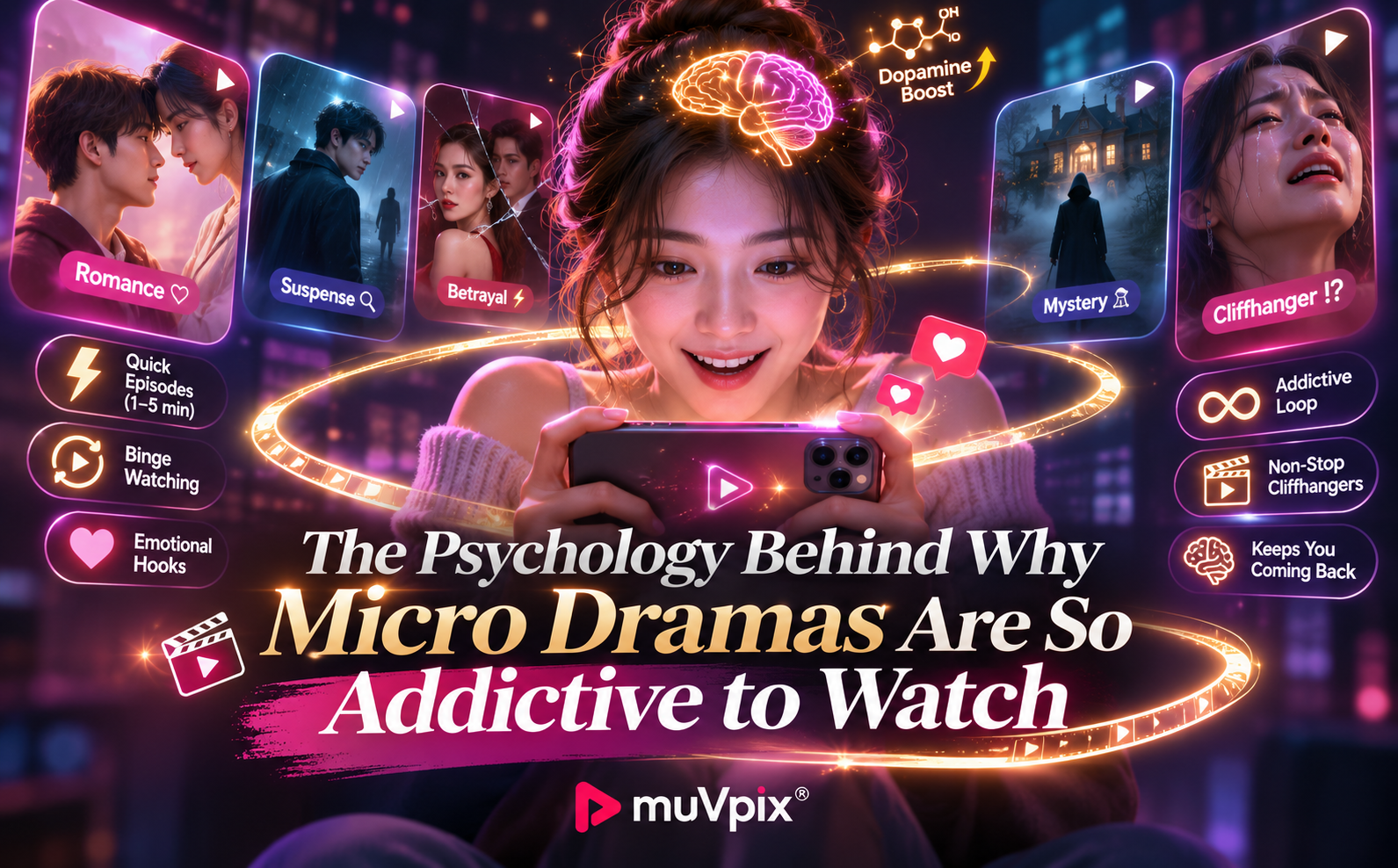
Have you ever watched a short drama and wanted to know what happens after a heated argument or shocking secret? That's the power of conflict.
How muVpix uses conflict to make short drama stories more powerful comes down to emotional struggles, character disagreements, unexpected twists, and difficult choices. These elements give every scene a purpose.
Let's explore how muVpix uses conflict to build suspense, connect viewers with characters, and make short drama stories more engaging.
Why Is Conflict Important in Short Drama Stories?
Conflict gives a story something worth watching. Without a problem, characters have little reason to change or make difficult choices.
In short-form drama, every minute matters. A strong drama story conflict helps writers:
Create tension from the beginning.
Build emotional connections with characters.
Make viewers curious about upcoming events.
Give each scene a clear purpose.
Turn simple situations into powerful moments.
This is why conflict plays such an important role in muVpix short drama stories. As a mini-drama platform, muVpix brings emotional struggles and engaging storylines together to keep viewers interested in what happens next.
How muVpix Uses Conflict to Make Short Drama Stories More Powerful
muVpix uses different forms of conflict to add emotion, suspense, and drama to short-form storytelling. Each struggle gives viewers another reason to stay connected.
1. Creates Immediate Tension Through Character Disagreements
Arguments and misunderstandings can make a story interesting right away. Imagine two people who love each other but cannot agree on an important decision.
That tension makes viewers curious. They want to know who will give in and what happens next. This approach helps muVpix short drama conflicts grab attention without needing a long introduction.
2. Builds Emotional Connections Through Relationships
Some of the strongest drama comes from personal relationships. Jealousy, broken trust, family pressure, and hidden feelings can change how characters treat each other.
These situations make emotional drama series more relatable. Viewers may recognize similar feelings from their own lives. A simple disagreement can suddenly feel much bigger when love, friendship, or family is involved.
3. Uses Unexpected Twists to Build Suspense
Just when viewers think they understand a story, a new secret or revelation can change everything.
For example, a character may discover that someone they trust has been hiding the truth. That single moment can create fresh tension and change the direction of the plot.
In micro drama storytelling, these surprises help maintain interest across short episodes. They also give viewers a reason to keep watching on muVpix.
4. Gives Characters Difficult Choices
A character becomes more interesting when they must choose between two things that matter.
Think about someone choosing between family expectations and personal happiness. Neither option feels easy.
These choices reveal a character's values, fears, and personality. They also make the story feel more meaningful because viewers can understand the pressure behind each decision.
5. Turns Small Problems Into Bigger Story Developments
A small misunderstanding can lead to a serious argument. That argument can damage a relationship, reveal a secret, or create another problem.
This chain of events gives vertical drama stories a natural sense of movement. Instead of adding random events, muVpix-style storytelling can use one conflict to push the next part of the plot forward.
For example, viewers interested in relationship-driven stories can explore Swipe Left Dying for Love, where romantic tension offers an interesting starting point for understanding this kind of drama.
How Does Conflict Keep Viewers Engaged on muVpix?
Conflict gives viewers a reason to care about what happens next. They may want to see a couple fix their relationship, a character expose a lie, or someone finally stand up for themselves.
This emotional connection makes short-form drama more enjoyable.
On a Vertical Drama App, short episodes and dramatic moments can work together to create a strong viewing experience. Viewers can follow the story during a quick break, while waiting for coffee, or before bed.
muVpix brings this short-drama experience to viewers who enjoy fast-moving plots and emotional storytelling.
What Makes Conflict Effective in muVpix Short Dramas?
Not every argument makes a story powerful. Conflict works best when it feels meaningful and connects with the characters.
Here are five elements that make a difference:
Clear problems: Viewers should understand what is at stake.
Strong emotions: Characters need believable feelings and reactions.
Relatable situations: Love, trust, jealousy, and family issues create connections.
Well-timed twists: Surprises should move the story forward.
Meaningful outcomes: Conflicts should change characters or relationships.
These elements help a short drama app deliver stories that feel engaging, even within a limited runtime.
Conclusion
Conflict is what gives short dramas their emotional pull. How muVpix uses conflict to make short drama stories more powerful comes down to strong characters, relationship struggles, unexpected twists, and meaningful storylines.
These elements build suspense, deepen character development, and keep viewers curious about the next episode.
By bringing together emotional storytelling, dramatic tension, and engaging plots, muVpix makes short-form drama a more memorable viewing experience.




Join the Conversation
Be respectful and constructive. Please review our Community Guidelines before posting.
No comments yet. Be the first to share your thoughts.