
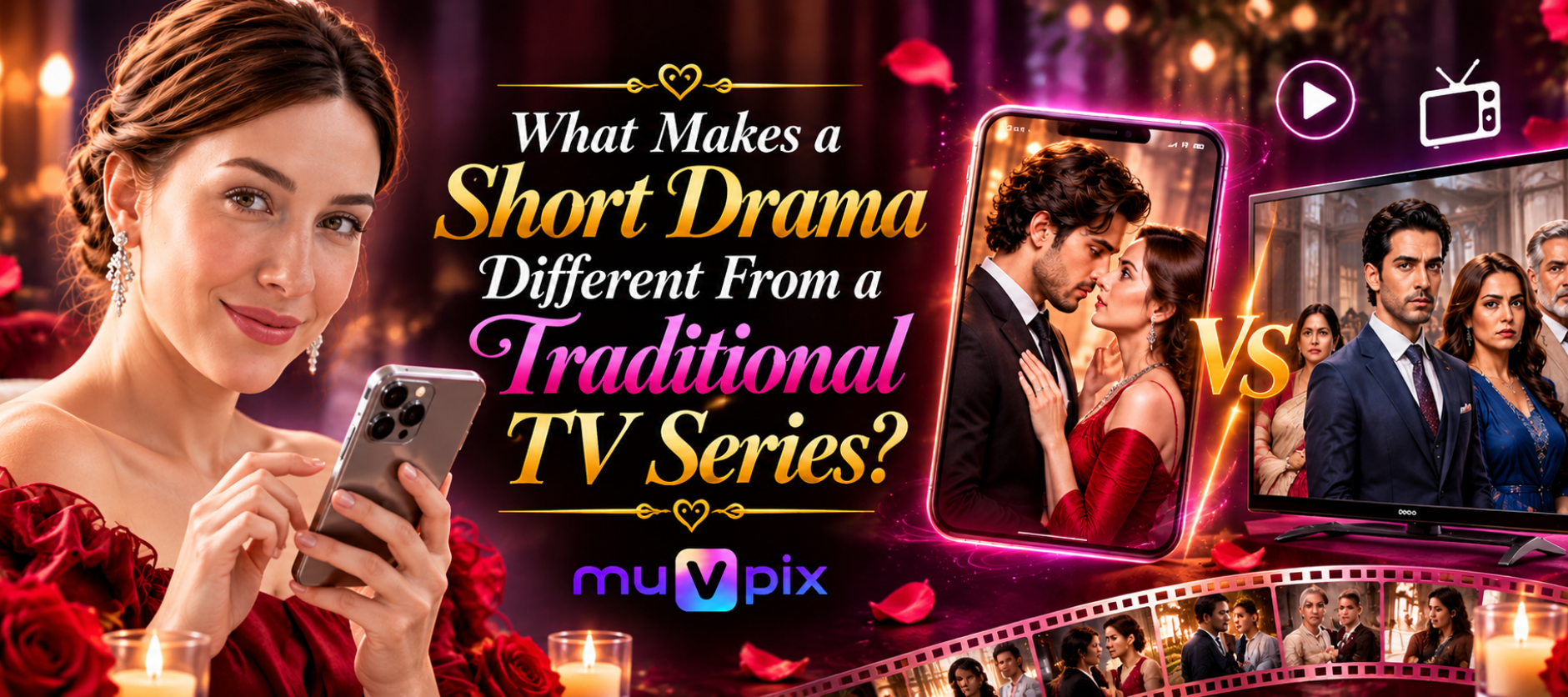
Have you ever started a show and wished the story would get to the point faster? Long episodes and slow plot development can make watching TV feel like a commitment. Short dramas offer a different experience, with quick scenes, short episodes, and fast-moving stories. But shorter episodes do not always mean less storytelling. The format changes how stories reach viewers. In this guide, we'll explain what makes a short drama different from a traditional TV series, from episode length and storytelling to screen format and viewing habits.
What Is a Short Drama?
A short drama is a scripted series that tells a story through brief, connected episodes. Most episodes last only a few minutes, making them easy to watch during a lunch break or while waiting for an appointment.
Also called a 'short-form drama' or 'micro-drama', this format often uses fast-paced plots, emotional moments, and cliffhangers to keep viewers interested.
Many short drama series are made for mobile-first viewing, especially on smartphones.
Unlike a full-length TV show, a short drama delivers its main story moments in less time.
What Makes a Short Drama Different From a Traditional TV Series?
The biggest difference comes down to episode length, storytelling, screen format, and viewing experience. Both formats tell stories, but they use different ways to keep viewers interested.
These are common patterns, not fixed rules. Some mobile dramas use horizontal screens, and some streaming TV shows have short episodes.
The real difference is how each format uses its available screen time to tell a story.
How Does Storytelling Differ in Short Dramas and Traditional TV Shows?
Storytelling is where the difference becomes easy to notice.
Short dramas move quickly. A conflict may appear in the first episode, and the next few episodes can bring major changes. There is little room for scenes that do not move the story forward.
Traditional TV series often take more time to build relationships, explain backstories, and develop side characters.
Here are three common differences:
Faster plot development: Short dramas introduce conflicts and surprises quickly.
Focused characters: Important characters get more attention, while smaller storylines may receive less time.
Detailed storytelling: Traditional TV shows can explore emotions, relationships, and multiple storylines at a slower pace.
For example, a romance short drama may introduce a relationship problem within the first few minutes. A traditional TV series might spend an entire episode building that connection.
A title like Swipe Left Dying for Love can help readers explore how a short drama presents romance through a compact, connected story.
How Do Episode Length and Viewing Experience Differ?
Think about watching a show during a busy day. You may have 10 minutes before your next meeting, not an entire hour.
That is where short dramas fit naturally.
Short drama episodes are designed for quick viewing. Many use vertical video, so viewers can watch without turning their phones sideways. A vertical drama app can offer this mobile-friendly experience through a portrait-style screen.
Traditional TV series usually follow a horizontal format. They work well on televisions and larger screens, where viewers can enjoy longer scenes and detailed visuals.
Neither format is better for everyone. It depends on how much time you have and how you like to watch stories.
Why Are Short Dramas Becoming a Different Entertainment Experience?
People now watch videos during short breaks, commutes, and quiet moments at home. Entertainment habits are changing, and short dramas fit into these routines.
A few reasons behind their growing appeal include:
Easy access: Viewers can watch short episodes without setting aside an hour.
Quick storytelling: Fast plot changes make it easy to stay interested.
Mobile convenience: Dedicated apps make it simple to find and watch connected episodes.
Industry research from Deloitte and Omdia has also highlighted the growth of mobile-first, bite-sized scripted entertainment.
A short drama app brings these stories together, giving viewers a simple way to discover new titles and follow ongoing episodes.
Short Drama vs. Traditional TV Series: Which One Should You Watch?
The right choice depends on your viewing habits and the kind of stories you enjoy.
Choose short dramas if you:
Prefer quick episodes and fast-moving plots.
Watch most entertainment on your phone.
Enjoy emotional twists and cliffhangers.
Have limited time for longer shows.
Choose traditional TV series if you:
Enjoy detailed stories and character development.
Prefer longer episodes.
Like exploring several storylines.
Want a longer viewing experience.
You can also enjoy both. A mini drama platform may suit quick entertainment, while a traditional streaming service can offer longer stories for a relaxed evening.
Conclusion
Short dramas offer fast storytelling, brief episodes, and a mobile-friendly viewing experience. Traditional TV series provide more room for detailed plots and character growth. Neither format has to replace the other. What makes a short drama different from a traditional TV series is how it uses screen time, story structure, and viewing habits to create a different entertainment experience.





Join the Conversation
Be respectful and constructive. Please review our Community Guidelines before posting.
No comments yet. Be the first to share your thoughts.