
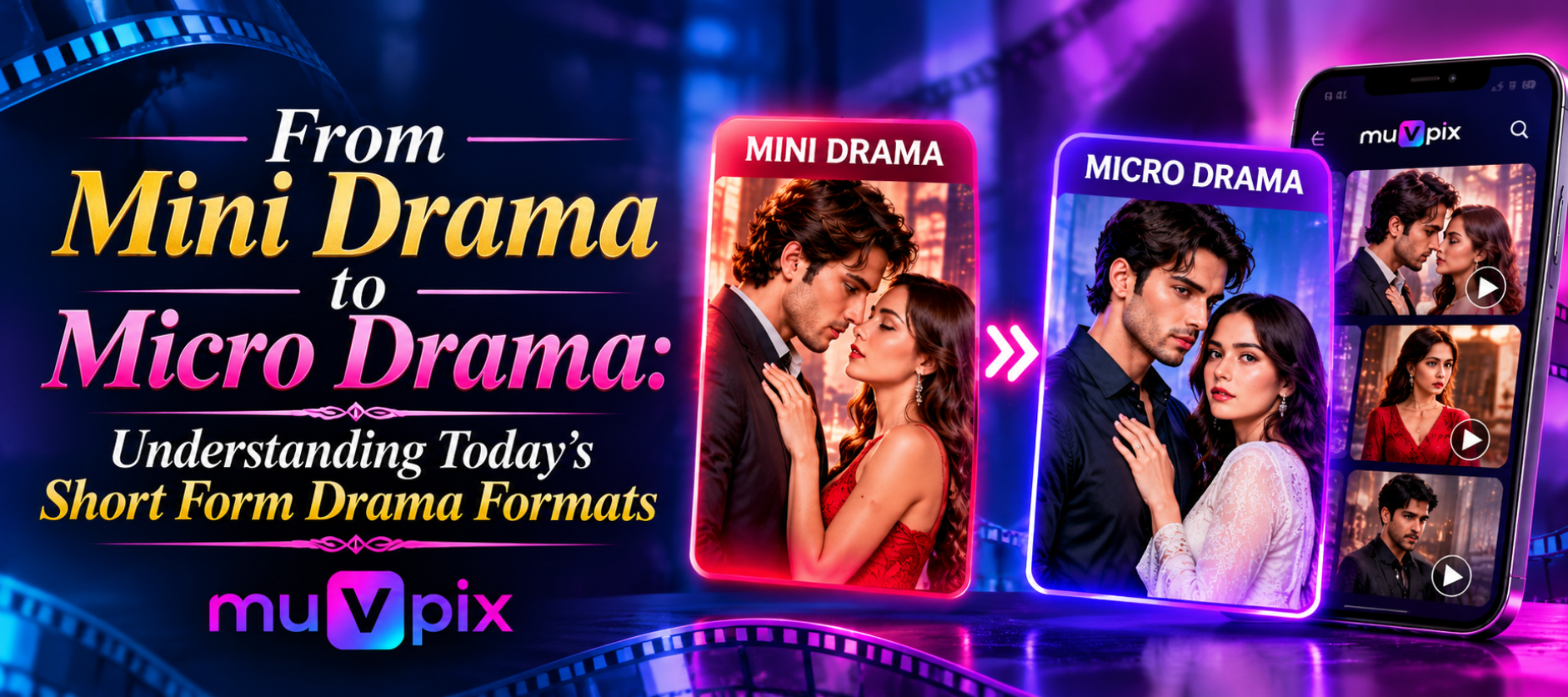
Have you ever started watching a drama and wished the story would get to the point a little faster? That's one reason short-form drama is getting attention. People still love romance, suspense, comedy, and emotional stories. They just don't always have time for long episodes.
This change has given rise to different formats, from mini drama to micro drama. While both offer shorter storytelling experiences, they work in different ways. Let's look at how these formats have evolved and what makes each one different.
What Is Short-Form Drama and How Has It Evolved?
Short-form drama is a type of scripted entertainment that tells a story through shorter episodes instead of traditional TV-length installments. It gives viewers a way to follow a complete story without spending hours on a single episode.
The format has changed over time. Traditional mini-series introduced shorter, limited storylines. Mini dramas made episodic stories easier to watch in smaller sessions. Now, micro dramas take things further with very short episodes designed mainly for mobile viewing.
The big change? Stories are becoming more compact, but they still need to hold the viewer's attention.
What Is a Mini Drama?
A mini drama is a short episodic series that tells a connected story over a limited number of episodes. Unlike a long-running TV show, it usually has a more focused plot and a clear direction.
Think of a romance story that follows two people as they meet, face problems, fall in love, and reach a final decision. Instead of stretching that journey across several seasons, a mini drama tells it in a shorter format.
Some common features include:
A focused storyline with a clear ending.
Character development across multiple episodes.
Romance, family conflict, mystery, and other familiar themes.
Titles such as Swipe Left Dying for Love can serve as examples when exploring how romance and emotional tension help carry a short episodic story.
What Is a Micro Drama?
A micro drama takes short storytelling even further. It usually features very brief episodes, often designed for viewers watching on their phones.
Each episode gets to the main action quickly. There is little room for slow introductions or long conversations. A surprise, argument, romantic moment, or shocking reveal can move the story forward in seconds.
Common features include:
Very short episodes with fast-moving plots.
Strong emotional moments and frequent cliffhangers.
Stories designed around mobile viewing.
The idea is simple: give viewers a reason to watch the next episode before they put their phones down.
Mini Drama vs. Micro Drama: What Is the Difference?
Both formats tell stories in shorter episodes, but their pacing and structure are not quite the same.
There is no fixed industry-wide episode length that separates the two. Different platforms use these terms in different ways.
The main difference comes down to storytelling. A mini drama has more room to build a scene, while a micro drama needs to make every moment count.
How Vertical Drama Is Changing Mobile-First Storytelling
Have you noticed how much easier it feels to watch a video when you don't need to turn your phone sideways? That's where vertical drama comes in.
These stories are often filmed in a portrait format, usually 9:16, to fit smartphone screens. But the change goes beyond screen size.
Writers and directors also adjust how scenes work. Close-up shots, facial expressions, quick cuts, and short conversations help tell the story on a smaller screen.
A vertical drama app brings this viewing style into a dedicated entertainment experience. It allows stories to be presented in a format that feels natural on a smartphone.
This is mobile-first storytelling: creating the experience for the phone from the beginning instead of adapting a traditional TV show later.
Popular Examples of Short-Form Drama Formats
Short-form drama is no longer limited to one type of platform. Dedicated entertainment apps have helped bring serialized stories to mobile viewers.
For example:
muVpix: Known for short, serialized dramas with romance, suspense, and dramatic twists.
DramaBox: Offers a range of short dramas across different genres.
Short-form video platforms: Can also introduce viewers to brief scripted stories and drama clips.
A short drama app brings multiple stories together, often with separate episodes and connected plots. That's different from watching a random short video. A drama needs continuity, characters, and a reason to follow the next episode.
What Is Next for Mini Drama and Micro Drama?
Mini drama and micro drama don't have to compete. Both serve different storytelling needs.
Some viewers enjoy stories that give characters time to grow. Others prefer quick episodes with a surprise at the end. As mobile viewing continues to shape entertainment, creators have more room to experiment with episode lengths, genres, and story styles.
A mini drama platform can bring these different formats together and give creators more ways to reach viewers.
Shorter Episodes, Bigger Stories
The move from mini drama to micro drama shows how storytelling keeps changing with the way people watch content. The episodes may be shorter, but the need for good characters, strong emotions, and engaging plots remains the same. In the end, a good story is still a good story, no matter how long an episode lasts.





Join the Conversation
Be respectful and constructive. Please review our Community Guidelines before posting.
No comments yet. Be the first to share your thoughts.